 +(91) 7014642242
 neurospinesolution@gmail.com

What is Manual Therapy?
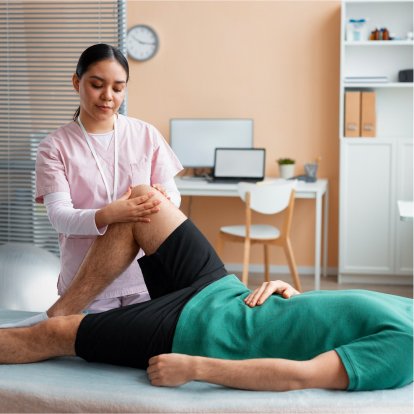
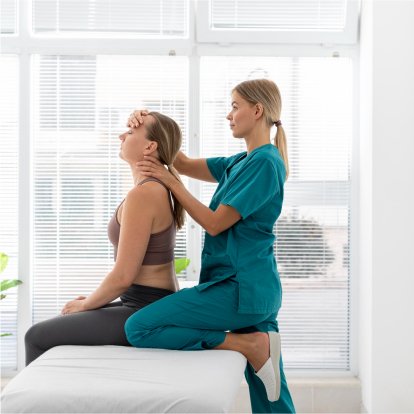
Manual Therapy is a hands-on technique used by physiotherapists to treat musculoskeletal pain and dysfunction. Instead of relying solely on machines, it involves a range of physical techniques applied directly to the body to alleviate pain, improve mobility, and enhance overall function.
Our approach includes gentle, controlled movements applied to joints and soft tissues to improve range of motion (Mobilization) and high-velocity thrusts to restore joint mechanics (Manipulation). This helps break down scar tissue, relax tense muscles, and restore normal movement patterns.
Our Individualized Approach
We tailor every session to meet your specific needs and recovery goals:
Customized Plans:
Tailored specifically to your condition.
Personal Assessment:
In-depth analysis of your movement.
Improved Mobility:
Restoring full range of motion.
Patient Education:
Teaching you how to prevent recurrence.
Techniques We Use
We employ various evidence-based manual techniques:
Joint Mobilization
Gentle, rhythmic oscillations applied to a joint to decrease pain and improve range of motion without a sudden thrust.
Soft Tissue Mobilization
Deep tissue massage and myofascial release to break up scar tissue, relax muscle tension, and improve circulation.
Joint Manipulation
High-velocity, low-amplitude thrusts to restore joint mechanics, often accompanied by a "pop" sound (gas release).
Frequently Asked Questions
Common questions about Manual Therapy.
It is highly effective for back pain, neck pain, headaches, shoulder impingement, hip/knee osteoarthritis, and various sports injuries that involve joint stiffness or muscle tightness.
Most techniques are not painful. You might feel some pressure or mild discomfort as tight tissues are released, but our therapists always work within your comfort level.
Yes. While it includes soft tissue techniques similar to massage, manual therapy focuses more on specific clinical outcomes, joint mechanics, and restoring function rather than just relaxation.
Yes, when performed by a qualified physiotherapist, it is very safe. We conduct a thorough assessment before treatment to ensure the selected techniques are appropriate for your specific condition.